
Artificial Intelligence: The Real Villain or Just a Convenient Scapegoat for Job Reductions?
An in-depth exploration of: AI-Driven Layoffs, Post-Pandemic Recovery, and the Rise of ChatGPT

November 30, 2022, was quite a hectic day for the world. Picture this: two years after the COVID outbreak, life appears to be returning to normal. In the United States, the January 6 riots were brought to court, with the Department of Justice seeking all transcripts and evidence related to those events.
In a significant address at the White House Tribal Nations Summit, President Biden unveiled a $135 million initiative aimed at Tribal climate relocation and protecting Native languages and rights. At the same time, the labor market showed resilience, with private employment rising by 127,000, while the unemployment rate held steady at 3.7%.
Things appeared to be stable and promising. In response to an increasing number of civil rights incidents, companies embraced a trend focused on Diversity, Equity, and Inclusion, aimed at enhancing opportunities for underrepresented groups.
Spotify revealed its most-streamed global albums of the year, which include:
Bad Bunny – Un Verano Sin Ti
Harry Styles – Harry’s House
Olivia Rodrigo – SOUR (debut album)
Ed Sheeran – =
Doja Cat – Planet Her (Deluxe)
In a world that seemed to be embracing and redefining normalcy, we were caught off guard when OpenAI unveiled an early demo of a groundbreaking innovation set to transform our perceptions of communication, creativity, and understanding.
Within a mere five days, over a million individuals were captivated by the chatbot. ChatGPT is not just a revolutionary and highly effective tool; it is also starting to significantly disrupt the job market.
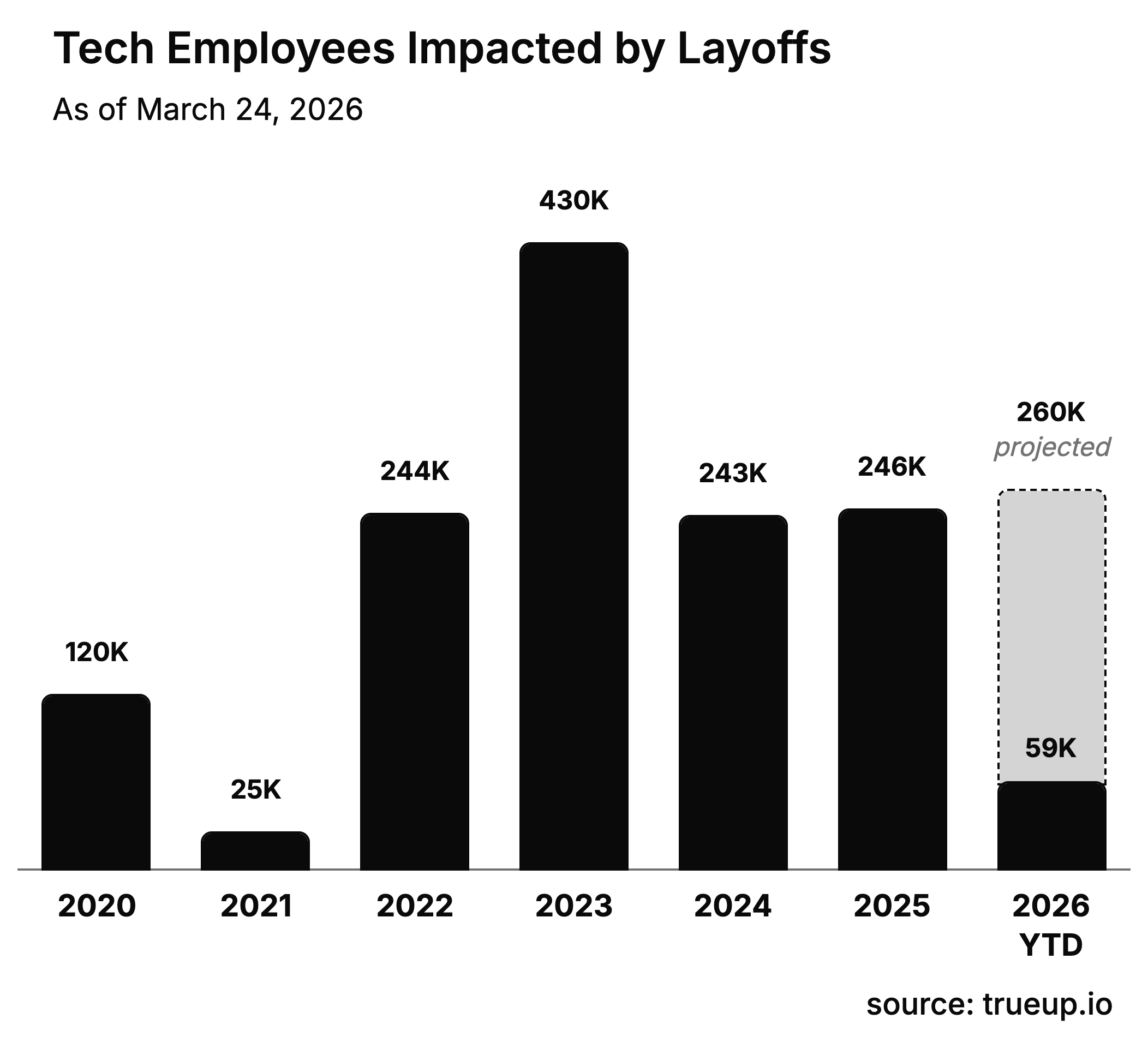
The Influential Chatbot
ChatGPT has significantly shaped the development of artificial intelligence, leading to remarkable progress in natural language understanding. Its success has showcased the efficiency of transformer-based models for language-related tasks, inspiring other AI researchers to embrace and enhance this architecture.
ChatGPT has made notable contributions across multiple industries, including:
● Customer service: Companies are leveraging ChatGPT to automate responses to common inquiries.
● Education: ChatGPT is being used to create intelligent tutoring systems capable of providing personalized assistance to students.
● Content creation: Journalists, copywriters, and content creators are using ChatGPT to generate creative ideas, draft articles, and even write poetry.
● Businesses: All kinds of professionals are using the chatbot to automate tasks like drafting emails or writing code.
● Healthcare: Providers and staff can leverage the chatbot for use cases like clinical decision support, medical recordkeeping, analyzing and interpreting medical literature, and disease surveillance.
● Entertainment: ChatGPT can be used to generate video game storylines and movie scripts, write dialogue, and improve gaming.

The Rise of ChatGPT and Tech Layoffs
Fast-forward to 2026, and ChatGPT has significantly transformed into an extraordinary tool, captivating the attention of both individuals and industries eager to explore its capabilities.
However, as the excitement for AI grows, we are witnessing a substantial wave of layoffs in the workforce, raising questions about the extent of research conducted on whether AI can truly replicate human interaction.
The tech world’s rush to embrace AI, while promising to make things more efficient, needs to be balanced with a good understanding of the little perks that come with human interaction — perks that technology might struggle to match.
When companies are thinking about using AI, it’s super important for them to really think about what it means to swap out human roles for AI. Have they honestly looked into whether AI can keep up the same level of customer service, creativity, and communication that comes naturally to human employees?
Each industry and product possesses its own distinct voice and experience. Can AI help maintain that essence or even enhance it? While reducing costs might appear to be a wise choice for businesses, it’s important to consider whether it’s worth the potential losses.
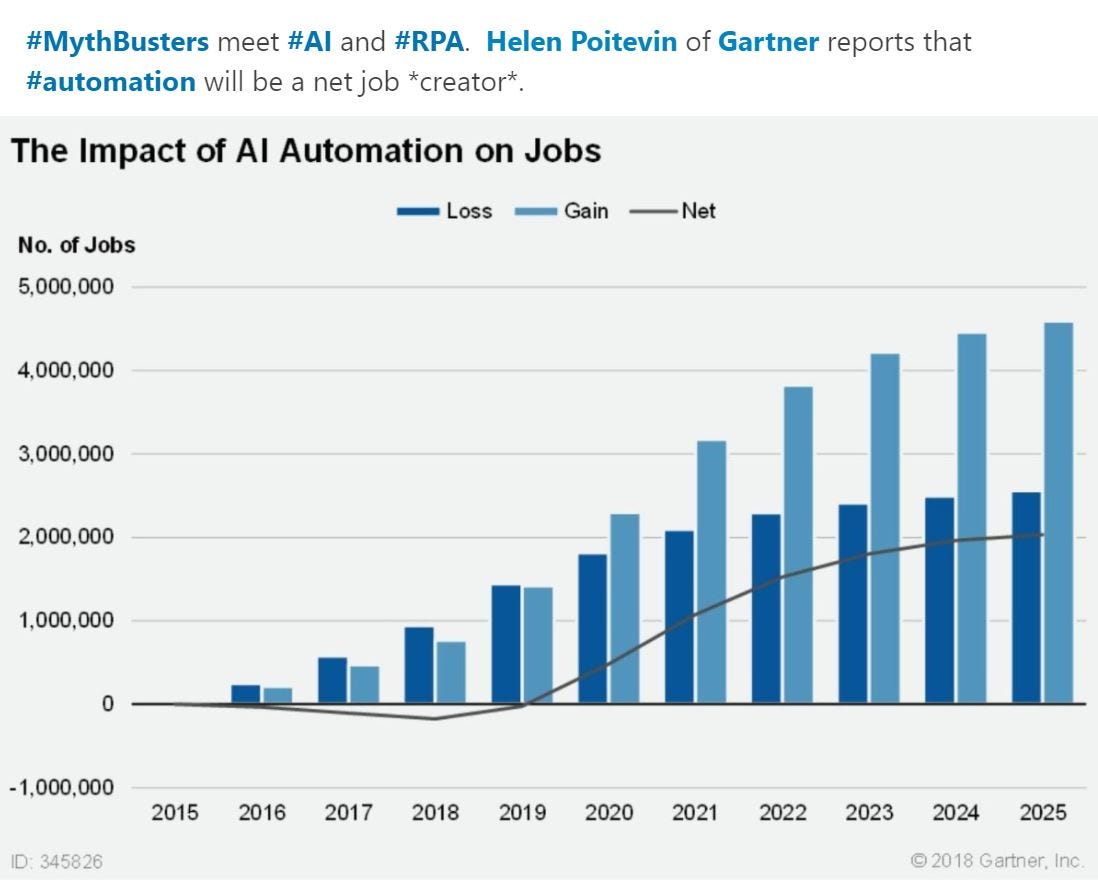
Companies Fully Embracing AI
Several organizations have allowed AI to assume roles traditionally occupied by humans. For instance, Klarna paused hiring for over a year and decreased its workforce from 5,500 to 3,400 by the end of 2024, all while introducing an AI chatbot that claimed to manage the responsibilities of 700 customer service agents.
Within six months of that decision, customer satisfaction declined, and service quality was reported as inconsistent. In response, Klarna started recruiting software engineers, designers, and marketing staff to handle customer inquiries.
Klarna isn’t the only company to shift roles to AI only to later reintegrate the human element. This experience has suggested that we might be employing AI inappropriately.
The conversation surrounding AI’s position in the workforce is complex. It requires a balance between technological progress and thoughtful human resource management. The focus should not be solely on what AI can accomplish but also on how it can harmoniously coexist with human talent.
This involves re-evaluating roles, investing in skill development, and fostering environments where humans and AI collaborate effectively. Moreover, this situation underscores the importance of transparency and ethical considerations in AI implementation.
Is AI the scapegoat?
Since the launch of ChatGPT, many companies have drastically downsized their workforce, with some reducing their staff by as much as 45%. The primary factor behind this trend seems to be AI and automation. But is this really the main cause of the significant job losses in the labor market?
While it’s true that advancements can render certain roles outdated, such drastic changes seem rather suspicious. In a CBS News article, Mary Cunningham points out that economists have noted a growing trend where numerous companies are using AI as a reason to reduce their workforce.
In her article, she refers to Ben May, the director of global macro research at the investment advisory firm Oxford Economics. He noted in a recent report that while some jobs may be at risk from AI, the majority of employers do not appear to be actively replacing their workers with artificial intelligence.
“We suspect some firms are trying to dress up layoffs as a good news story rather than a bad one — for example, by pointing to technological change instead of past overhiring”
-Ben May
His statement underscores the hiring boom of 2020, when numerous tech and logistics firms recruited large numbers of employees to sustain revenue throughout the COVID pandemic. Ironically, many of these companies are now facing substantial layoffs.
According to the U.S. Bureau of Labor Statistics, job openings reached record highs in 2022, signaling the labor market’s ongoing recovery.
Furthermore, employer costs have seen a modest increase. In 2022, compensation costs for civilian workers rose by 5.1 percent, compared to a 3.9 percent rise in 2021.
The Current Workforce Landscape
As layoffs persist, the workforce continues to face challenges. Recently, Jack Dorsey, co-founder of Twitter, noted in a letter to shareholders, “A significantly smaller team, using the tools we’re building, can do more and do it better.”
Many companies appear to be adopting this model; however, the data presents a contrasting narrative. Lisa Simon, chief economist at Revelio Labs, which specializes in collecting and analyzing public labor market data, suspects that some organizations are using their reliance on AI as a justification for job cuts.
“Companies aim to eliminate departments that no longer benefit them”
-Lisa Simon
Outplacement firm Challenger, Gray and Christmas predicts that notices of layoffs related to AI will continue to emerge. “This technological innovation will likely impact nearly every industry,” Challenger remarked.
While AI can potentially save time on certain tasks, it has also coincided with over 500,000 tech workers losing their jobs since its launch. While AI has the potential to streamline certain tasks, it has also been linked to the loss of over 500,000 tech jobs since its introduction.
Author Anil Dash points out in his article, “500,000 Tech Workers Have Been Laid Off Since ChatGPT Was Released,” that the main reasons for these layoffs are often described as “pursuing efficiencies” or “right-sizing.”
“... those workers haven’t been laid off because their jobs are now being performed by AI, and they’ve been replaced by bots. Instead, they’ve been laid off by executives who now have AI to use as an excuse for targeting employees they’ve wanted to let go all along.”
-Anil Dash
This viewpoint sparks a conversation about the broader implications of AI in the workplace. While AI brings efficiencies and innovation, it also introduces new challenges for labor dynamics.
Job Loss and Reductions
Regarding job loss and the reduction of headcount, the survey findings indicate that companies are choosing to cut staff before reaping the benefits of AI’s influence.
In the article “Tech Companies Are Blaming Massive Layoffs on AI. What’s Really Going On?,” author Uri Gal explores the relationship between AI and layoffs, identifying two distinct types of workforce reductions.
AI increases productivity, reducing the need for employees
Layoffs finance AI initiatives rather than being directly caused by AI
The article employs Meta as an example to highlight this distinction. The social media behemoth is reportedly considering laying off up to 20% of its workforce, all while pledging a significant investment of US$600 billion to construct data centers and attract leading AI researchers.
In this scenario, the employees facing layoffs are not being replaced by AI in the present; rather, they are funding the AI gamble their employer is making for the future.
In 2025, U.S. employers reported a total of 1.2 million job cuts, the highest annual figure since 2020, as noted by the Wall Street Journal, which cited data from the outplacement firm Challenger, Gray & Christmas.
In January of this year, U.S. employers announced 108,435 layoffs for the month, representing a remarkable 118% increase compared to the same month last year and a staggering 205% rise from December 2025. This figure marks the highest number of layoffs recorded in any January since 2009.
Concurrently, companies reported only 5,306 new hires, the lowest January figure since Challenger, Gray & Christmas began tracking this data in 2009. Job openings also saw a significant decline in December, dropping to 6.54 million, the lowest level since September 2020. Since October, available jobs have decreased by over 900,000.
While the unemployment rate reached a record low of 4.4% in December, hiring has lagged. U.S. jobless aid filings for the week ending January 17 increased to 200,000, up from 199,000 the previous week, though this is fewer than the 207,000 new applications analysts had anticipated, according to the Associated Press (AP).
Additionally, employers added only 50,000 jobs last month, a stark contrast to the hiring boom of 400,000 jobs per month during the 2021-2023 period following COVID-19 lockdowns.
The low unemployment rate indicates a “no-hire, no-fire labor market where companies are hesitant to onboard new employees but are reluctant to part with their current workforce,” as noted by AP.
The 2025 World Economic Forum Future of Jobs Report indicates that while 92 million jobs may be lost by 2030, 170 million new positions will emerge due to AI advancements, resulting in a net gain of 78 million jobs. The critical question for organizations is not if workforce transformation will happen, but how intentionally, inclusively, and sustainably it will be executed.

Conclusion
Navigating the landscape of artificial intelligence, particularly with innovations like ChatGPT, presents a complex but exciting frontier. This journey is marked by both the promise of unprecedented efficiency and the cautionary tale of potential workforce disruptions.
As we stand on the cusp of this transformative era, it is imperative to acknowledge AI’s dual impact on the world. On one side, AI heralds a new age of efficiency, with the potential to revolutionize creativity, communication, and productivity. It empowers industries to reimagine their operations and reach new heights of innovation.
On the other side, it poses significant challenges to traditional employment structures, urging a reevaluation of how we integrate technology into our lives and businesses.
To responsibly harness the potential of AI, organizations and individuals must strike a delicate balance. This involves embracing technological advancements while safeguarding the human elements that drive genuine innovation and empathy.
It requires a commitment to integrating AI into workflows with a focus on ethical considerations, transparency, and the continuous development of human skills.
The future of AI is a collaborative journey between humans and machines. By maintaining a focus on the human experience, we can ensure that AI serves as a tool for positive change, fostering environments that celebrate both technological prowess and human creativity.
As we move forward, this shared path promises to lead us toward a more enriched and productive world, where the synergy between humans and machines enhances all facets of life.
References
Associated Press. (2023, October 10). Jobs report shows unemployment rate steady as economy adds jobs. AP News. https://apnews.com/article/jobs-unemployment-economy-69f4fda3dc0c7a6053c799f70fc4522e
Block, Inc. (2025). Q4 2025 shareholder letter. https://s29.q4cdn.com/628966176/files/doc_financials/2025/q4/Q4-2025-Shareholder-Letter_Block.pdf
Bureau of Labor Statistics. (2023). Job openings reach record highs in 2022 as the labor market recovery continues. https://www.bls.gov/opub/mlr/2023/article/job-openings-reach-record-highs-in-2022-as-the-labor-market-recovery-continues.htm
CBS News. (2026). AI layoffs 2026: Artificial intelligence and its impact on employment. https://www.cbsnews.com/news/ai-layoffs-2026-artificial-intelligence-amazon-pinterest/
CNBC. (2026). Layoff and hiring announcements hit their worst January levels since 2009, Challenger says. https://www.cnbc.com/2026/02/05/layoff-and-hiring-announcements-hit-their-worst-january-levels-since-2009-challenger-says.html
Convenience.org. (2026). 5 companies cut jobs following pandemic hiring. https://www.convenience.org/Media/Daily/2026/January/30/5-Companies-Cut-Jobs-Pandemic-Hiring_Finance
Fast Company. (2026). Klarna tried to replace its workforce with AI. https://www.fastcompany.com/91468582/klarna-tried-to-replace-its-workforce-with-ai
Forbes. (2026). The missing link in AI is getting agents to think together. https://www.forbes.com/sites/outshift-by-cisco/2026/03/10/the-missing-link-in-ai-is-getting-agents-to-think-together/
Fortune. (2022). A look back at the most popular HR trends in 2022. https://fortune.com/2022/12/14/a-look-back-at-the-most-popular-hr-trends-in-2022/
Harvard Business Review. (2026). Companies are laying off workers because of AI’s potential, not its performance. https://hbr.org/2026/01/companies-are-laying-off-workers-because-of-ais-potential-not-its-performance
Harvard Business School. (2026). Riley performance resistance. https://www.library.hbs.edu/working-knowledge/riley-performance-resistance-2026
Infinitive. (2026). The looming impact of AI on U.S. jobs. https://infinitive.com/the-looming-impact-of-ai-on-us-jobs/
NineTwoThree. (n.d.). AI-first companies. NineTwoThree. Retrieved March 24,2026, from https://www.ninetwothree.co/blog/ai-first-companies
NPR. (2024, June 14). Supreme Court Jan. 6 prosecutions. NPR. https://www.npr.org/2024/06/14/nx-s1-5005999/supreme-court-jan-6-prosecutions
OpenAI. (n.d.). ChatGPT. Retrieved March 15, 2026, from https://openai.com/index/chatgpt/
OpenAI. OpenAI. (n.d.). How people are using ChatGPT. OpenAI. Retrieved March 16, 2026, from https://openai.com/index/how-people-are-using-chatgpt/
PBS NewsHour. (n.d.). U.S. lost 92,000 jobs last month and unemployment rate rises to 4.4. Retrieved March 15, 2026, from https://www.pbs.org/newshour/economy/u-s-lost-92000-jobs-last-month-and-unemployment-rate-rises-to-4-4
Revelio Labs. (n.d.). Retrieved March 15, 2026, from https://www.reveliolabs.com/author/lisa-k-simon/
Spotify Newsroom. (2022). https://newsroom.spotify.com/2022-11-30/the-top-songs-artists-podcasts-and-listening-trends-of-2022/
The AI Consulting Network. (n.d.). Retrieved March 15, 2026, from https://www.theaiconsultingnetwork.com/blog/meta-600b-ai-data-center-infrastructure-cre-investors-2026
The Conversation. (2026). Tech companies are blaming massive layoffs on AI: What’s really going on. https://theconversation.com/tech-companies-are-blaming-massive-layoffs-on-ai-whats-really-going-on-278314
The Week. (2022). https://theweek.com/briefing/daily-briefing/1018837/10-things-you-need-to-know-today-november-30-2022
Wall Street Journal. (2026). U.S. companies are still slashing jobs to reverse pandemic hiring boom. https://www.wsj.com/economy/jobs/u-s-companies-are-still-slashing-jobs-to-reverse-pandemic-hiring-boom-abf1b94e
World Economic Forum. (2026). Workforce transformation: AI and jobs. https://www.weforum.org/stories/2026/02/workforce-transformation-ai-jobs/
Images
Franck, T. (2025, October 19). Firms are blaming AI for job cuts—critics say it’s a good excuse. CNBC. https://www.cnbc.com/2025/10/19/firms-are-blaming-ai-for-job-cuts-critics-say-its-a-good-excuse.html (Retrieved March 24, 2026)
Horses for Sources. (2018). Gartner’s automation and AI predictions miss the mark. https://www.horsesforsources.com/gartner_fail_automation-ai_080418/
TrueUp. (2026). Layoff tracker. https://www.trueup.io/layoffs (Retrieved March 24, 2026)
World Economic Forum. (2026). Workforce transformation: AI and jobs. https://www.weforum.org/stories/2026/02/workforce-transformation-ai-jobs/ (Retrieved March 24, 2026)
Thanks for reading check out our podcast on your favorite platform!
Watch: https://www.youtube.com/@DefineDesignPodcast
Listen:
Define Design is on Substack! Subscribe for free to receive new posts and podcast updates.